Why Changing Your Mind Is a Good Idea (And Why It Isn't)
I change my mind. A lot. About what I do, what I think, where I'm headed. Ask anyone who knows me and they'll confirm it. Some of them will roll their eyes while they do.
I change my mind. A lot. About what I do, what I think, where I'm headed. Ask anyone who knows me and they'll confirm it. Some of them will roll their eyes while they do.
I've been called inconsistent. A scatter brain. "Didn't you say last week that you were going to...?", “Didn’t you think this about that”. Yes. I did. And now I'm saying something different. Thanks for noticing.
Here's the thing, though. I'm not going to pretend this is always noble. Sometimes I change my mind because new information has genuinely shifted my thinking. Sometimes it's because I've tested an idea and the evidence doesn't hold up. And sometimes... honestly... it's because I'm chickening out. Because the thing I committed to got hard and a fresh direction looked a lot more comfortable than pushing through the discomfort.
I know the difference. I don't always like admitting which one it is.
And that tension... that's what this piece is actually about. Because changing your mind can be the smartest thing you ever do, or the most destructive. The difference isn't whether you change direction. It's why.
What chess taught me
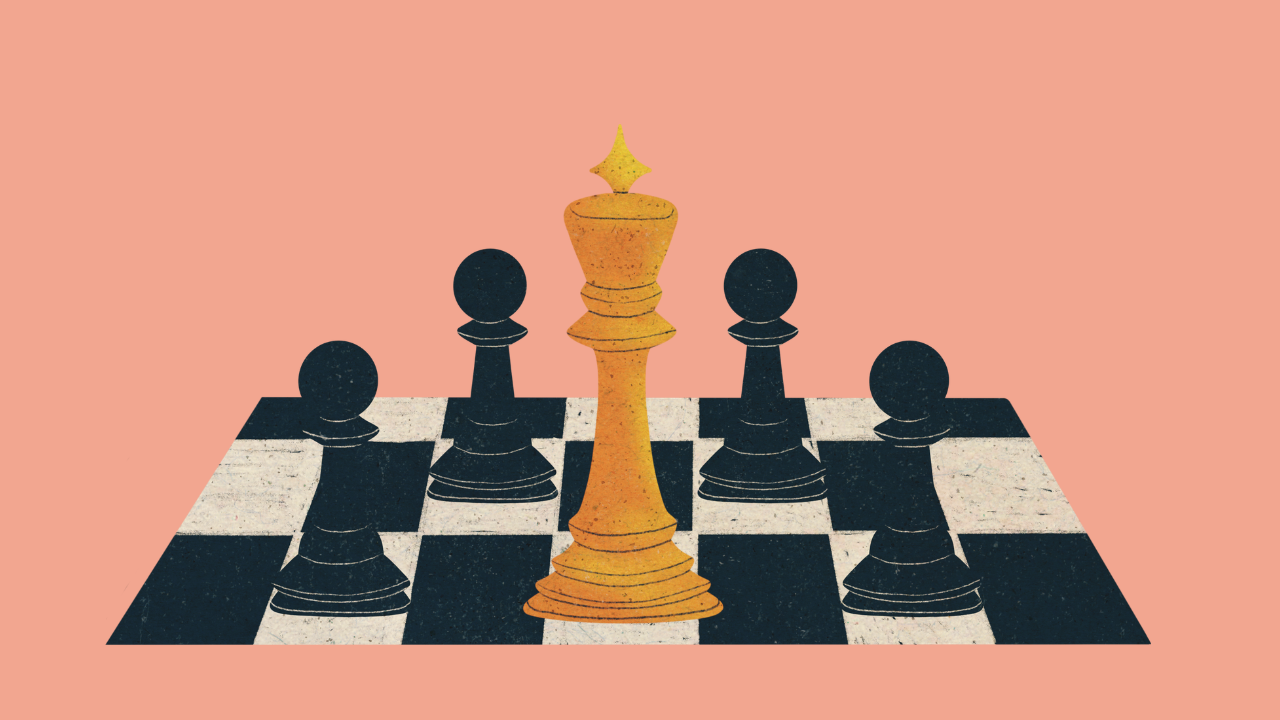
I play chess. I'm no master (I’m pretty mediocre), but it's taught me something I think about constantly. You sit down with a plan - albeit it for me quite vague. Control the centre, develop the knights, push for a kingside attack. Solid thinking. Then your opponent makes a move you didn't expect and suddenly your beautiful plan has a hole in it.
Now you have a choice. Stick to the plan regardless... or respond to what's actually happening on the board.
No decent chess player would bulldoze ahead with a strategy the board has already made redundant. That's not commitment. That's delusion. The whole game is a constant conversation between your intention and reality. You hold your objective, but you update your approach move by move based on what's unfolding in front of you.
The best players aren't the ones with the most rigid plans. They're the ones who read the board as it is, not as they wish it were.
I've come to believe life works exactly the same way. Entrepreneurship too. Creative work definitely.
The case for changing your mind
Most people cling to decisions that stopped working months ago because admitting they were wrong feels worse than living with the consequences. That's not strength. That's a cognitive anchor... a fixed mental position keeping you in familiar waters when everything around you is screaming "sail somewhere else."
We do this because our identity gets tangled up in our choices. "I'm the person who chose X." Once that frame is set, we filter everything through it. We notice the evidence that supports our original decision. We ignore the evidence that doesn't. We build an airtight case for staying exactly where we are.
Meanwhile, the world moves on without us.
Changing your mind in this context is an act of being At Cause. It means you're paying attention. Choosing your response to reality rather than defending a position that reality has already outgrown. Like the chess player who spots that their opponent has shifted the game... you're reading the board and responding.
The case against changing your mind
Now here's where I have to be straight… with myself.
Some of my mind-changing hasn't been noble course correction. It's been avoidance dressed up as flexibility. New idea every Monday. New angle every time the current one got uncomfortable. A pivot right at the moment when pushing through would have been the thing that actually mattered.
I've watched myself do it. Declare something. Start. Hit the hard bit... genuinely hard, in the way anything worthwhile is. And right at that point of discomfort, a shiny new thing appears. A better direction. A fresh start that conveniently means I never have to push through the difficult bit of the last one.
Back to chess. There's a difference between the player who adapts their strategy because the board demands it... and the player who abandons their strategy every three moves because they've lost confidence in it. The first player is reading the game. The second player doesn't have a game. They're just reacting. Flailing. Moving pieces without purpose.
I've been both players.
So where's the line?
I've landed on one clear question: Am I moving towards something, or away from something?
If I'm changing direction because I've genuinely learned something new... because the evidence has shifted, because I've tested my assumptions and they don't hold up... that's intelligence. That's reading the board.
If I'm changing direction because things got hard, because I'm bored, because starting fresh is more exciting than finishing what I started... that's the comfort zone pulling me back in. And the comfort zone, as we know, is where ideas go to die.
The honest check
Every time you’re about to change direction, sit with the decision for 48 hours. Don't act on it. Just notice what's driving it.
Is it new information? Or is it old fear?
Is it clarity? Or is it restlessness?
Is it a genuine read of the board? Or would you just rather start a new game?
The people who make things happen aren't the ones who never change their minds. And they aren't the ones who change their minds every five minutes. They're the ones who know the difference between a genuine course correction and a comfortable escape.
Name it honestly. Then choose.
That's not stubbornness. It's not flakiness. It's something rarer than both.
It's judgement.