Playing Make Believe
Children play make-believe with remarkable clarity. A cardboard box becomes a spaceship. A stick becomes a sword. The floor becomes lava. And yet, somewhere in the middle of the game, they still know it is a box, a stick, a floor. They are immersed and aware at the same time.
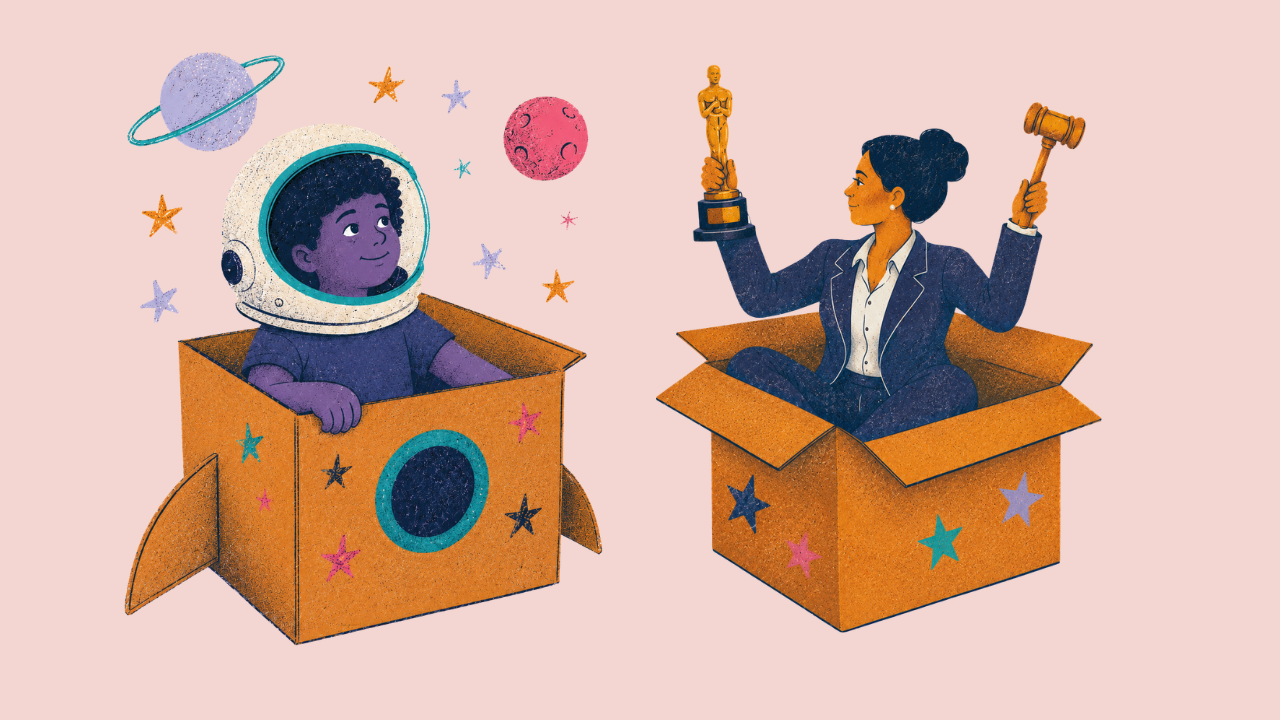
Children play make-believe with remarkable clarity. A cardboard box becomes a spaceship. A stick becomes a sword. The floor becomes lava. And yet, somewhere in the middle of the game, they still know it is a box, a stick, a floor. They are immersed and aware at the same time.
As adults we often lose this second part.
We still play make-believe… only now we call it identity, status, politics, career, reputation, success. We construct elaborate games and then… totally forget we made them up. We start treating the rules as though they arrived from the universe itself. “I’m not creative.” “Successful people behave like this.” “People like me don’t do that.” “I must not fail.” These are often just stories hardened into reality through repetition.
The strange thing is that much of human suffering comes not from the game itself, but from forgetting it is a game. Children can stop playing pirates and go in for dinner. Adults carry their characters for life
This does not mean life is meaningless or fake. Far from it. Games matter. Stories matter. Language matters. Nations, money, universities, marriages, brands, careers… these are all forms of collective stories. Very powerful ones. They shape behaviour and possibility. But they are still agreed-upon fictions.
The freedom comes in reminding ourselves of this fact.
Once you realise many of your limitations are inherited stories rather than laws of physics, possibility truly expands. You can experiment more. You can become less frightened of getting things “wrong”. You can loosen the grip of perfectionism and social performance.
In Make Happen we talk about frames… the invisible lenses through which we interpret reality.  Most adults are trapped inside frames they mistake for reality itself. Children move between frames fluidly. One moment superhero. Next moment shopkeeper. Then astronaut. No existential crisis required.
Perhaps maturity is not becoming completely serious. Perhaps maturity is remembering that much of what we take deadly seriously is largely invented… and then choosing our games consciously.
The child playing dragons may actually be closer to reality than the adult defending a LinkedIn job title as though civilisation depends on it!
What are some of the make believe games you’re currently playing?