The Trouble with Knowing
* * *
* * *
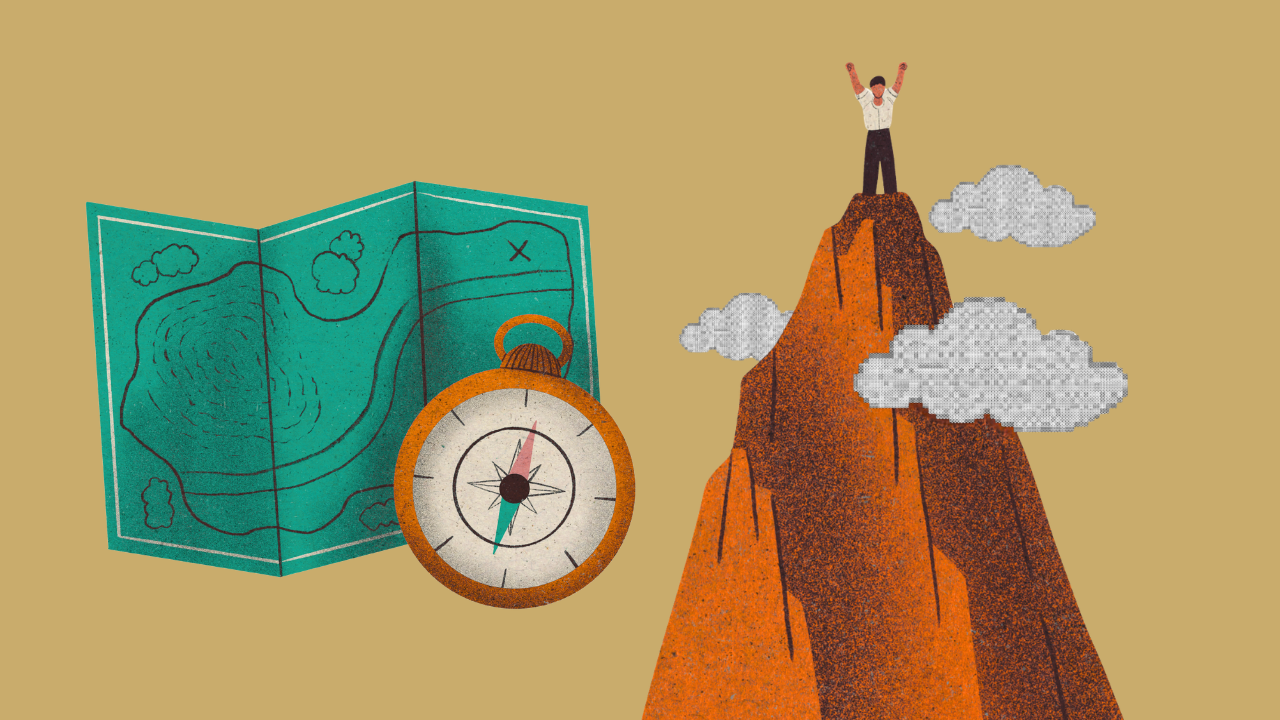
Knowing Is a Map.
Discovery Is the Terrain.
Most of us are brought up to worship the map. We cling to instructions, guidance, best practice, the promise that someone somewhere has already figured out the right route.
Maps feel comforting. Predictable. Safe.
But there’s a problem.
Maps are never the place.
Maps are approximations… sketches… borrowed certainty. They flatten a living landscape into neat lines and tidy legends. They erase the mud, the gradients, the unexpected turnings, the weather, the smell of the soil, the surprise of a clearing.
Maps are helpful…
but they aren’t alive.
Discovery is.
* * *
Knowing belongs to the map. Discovery lives in the terrain.
Knowing is cartography… the tidy drawing of what you assume is out there.
Discovery is the actual walk.
Knowing keeps you at a distance.
Discovery puts dirt under your nails.
Knowing tells you what should be.
Discovery shows you what is.
When students rely on module guides, rubrics, and learning outcomes, they are following the approach that traditional education has taught them. We all do it. School rewards the child who follows instructions, finds the right answer, colours inside the lines. Society echoes the same message: stay on the path, avoid mistakes, don’t fall behind. Over time, we learn to trust the map more than our own senses. We assume there must be a correct route buried somewhere in the paperwork, a safe sequence that guarantees a pass. But creativity doesn’t live in paperwork. It lives in movement, contact, friction, surprise… all the places the map can’t reach. Indeed we are the pioneers… the map makers, if you like.
This is why the Make Happen Method bangs the drum of action (I know, I know it’s relentless!):
Do, therefore know.
There is only now.
Evolving in the Wild.
These aren’t poetic slogans. They’re instructions:
Get off the map. Step onto the ground.
* * *
Maps kill nuance. Terrain creates it.
A map can show you the outline of a forest…
but only the forest can show you the quality of the light, the sound of branches, the feeling of being watched, the scent of moss rising after rain.
Likewise, knowing gives you the outline of an idea…
but only discovery gives you its texture.
You can study story structure for years…
but only writing badly in the middle of the night teaches you what your story wants.
You can learn colour theory…
but only mixing paint teaches you how colours behave when they meet your hand, your mood, your moment.
You can read 20 books about entrepreneurship…
but only one bold request sends a shock of possibility through your ribcage.
The terrain reshapes you.
The map never does.
* * *
Discovery is not the rejection of knowledge… it’s the activation of it.
A map becomes meaningful only when your boots meet the ground.
Knowing becomes meaningful only when you act.
Discovery integrates knowledge.
It tests it.
It bends it.
It breaks it open.
It reveals what the map forgot to mention… and what it couldn’t possibly know.
This is why we ask students to step into the Discomfortable (getting comfortable with discomfort)… because that’s where the terrain begins.
* * *
If you’re stuck, stop tracing the map. Start walking the terrain.
Don’t ask, “Which route is correct?”
Ask, “What can I explore next?”
Don’t ask, “What does the guide say?”
Ask, “What does the ground say?”
Don’t ask, “How do I avoid wrong turns?”
Ask, “What will I learn when I take one?”
When you stop trying to navigate from above
and start navigating from within,
you move from abstraction to experience…
from theory to texture…
from caution to momentum.
Knowing is the map.
Discovery is the terrain.
You need both…
but only one can change you.
* * *
The Practice: Step Off the Map
* * *
Try this short exercise… it takes five minutes and reveals exactly how much you’ve been navigating by the map rather than the terrain.
1. Grab a current project.
Something you’re thinking about, circling, planning… but not quite doing.
2. Write down the “map” thoughts.
List the instructions, expectations or imagined rules that hover in your mind.
Things like:
- I should know more before I start
- There’s a right order to this
- I need permission
- It has to be good first
Be honest. Maps often hide in polite language.
3. Now step into the terrain.
Ask yourself one simple question:
What tiny action could I take right now that would put me in contact with the work?
Not tomorrow. Not when the plan is perfect.
Right now… five minutes or less.
Examples:
- sketch one idea
- record a 30-second test clip
- write the opening sentence
- send one request
- publish a rough draft
- make something deliberately imperfect
4. Do it immediately.
Don’t negotiate. Don’t refine. Don’t return to the map.
Just move.
5. Notice what the terrain teaches.
What changed?