Your brain is lying to you!
»Buckle up this is a long one! AND worth the effort. Maybe skim it first. Decide what you’re going to do. And then work through the article with something specific. «
»Buckle up this is a long one! AND worth the effort. Maybe skim it first. Decide what you’re going to do. And then work through the article with something specific. «
I'm reading Anil Seth's Being You at the moment (for the second time!), and it's messing with my head. In the best possible way.
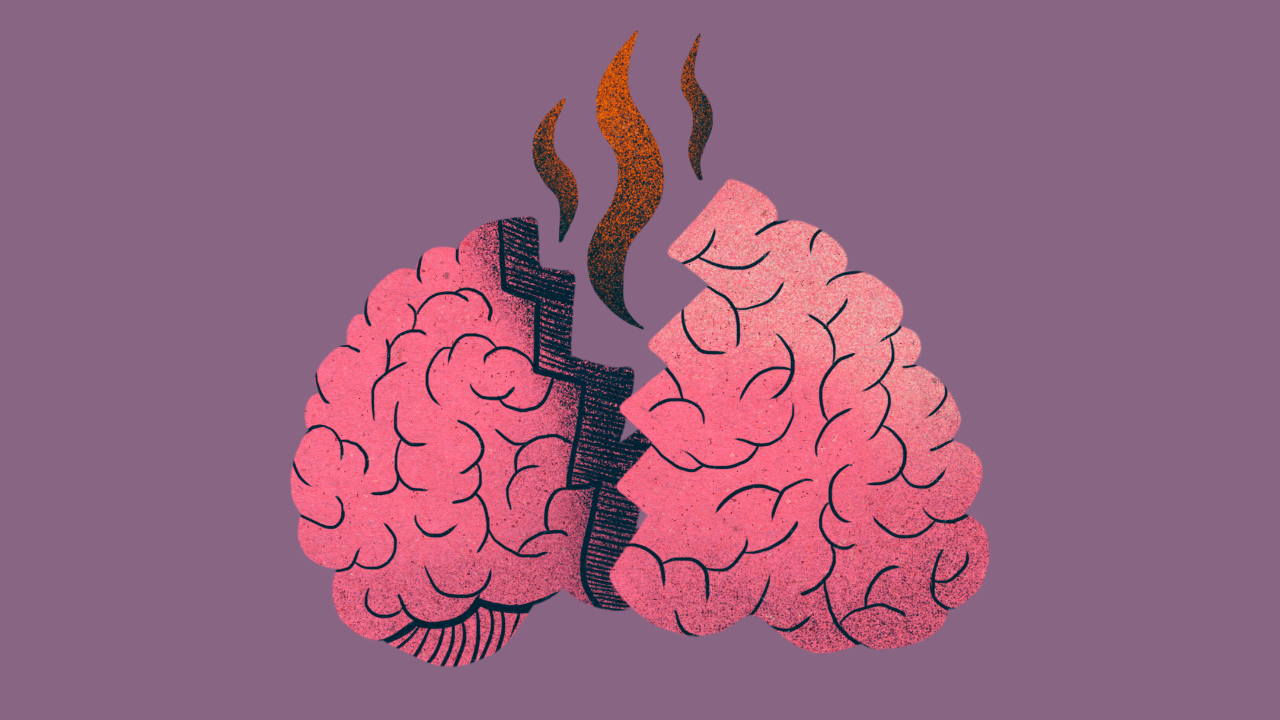
Seth is a neuroscientist, and his central claim is this: everything you perceive is a "controlled hallucination." Your brain doesn't passively receive reality. It predicts reality, then corrects when the prediction is wrong. You're not seeing the world as it is. You're seeing your brain's best guess, updated in real time.
Sound familiar? It should. Because this is exactly what we've been banging on about in Make Happen for years… the atoms bounce around and your brain builds a model. That model shapes every decision you make. And most people never question the model. They just act on it, wonder why things aren't working, and blame the world.
Here's the thing Seth's work makes painfully clear: you don't live in reality. You live in a draft of reality. And drafts can be rewritten.
That's not philosophy. That's a practical instruction.
Every Decision is a Bet on a Model
Think about it.
Pricing your workshop? That's a bet on how your audience values what you're offering. Writing a headline? A bet on what curiosity feels like inside someone else's head. Choosing a collaborator? A bet on future behaviour you can't possibly know yet.
Bad decisions come from models you've never tested. Stories that explain everything except the evidence. Self-sealing narratives that feel true because you've never exposed them to friction.
Good decisions come from models that have met the pavement. Tested. Adjusted. Tested again.
Act, Ship, Debrief. That's the method. That's predictive processing in action. You make a guess, you put it in the world, you let the world argue back.
The Practice: Guess, Test, Update, Repeat
This is evolutionary thinking applied to your work. Variation (your guess), selection (the test), amplification (what worked), extinction (what didn't).
1. Write Your Prediction Before Reality Speaks
Most people skip this step entirely. They act, then retrofit a narrative afterwards that makes them look clever. That's not learning. That's storytelling.
Instead, create a Prediction Ledger. Before you ship anything, write down:
I expect... (be specific) By when... (put a deadline on it) Because... (state your assumptions) Confidence... (0 to 100%, and be honest) What would change my mind? (name the evidence that would prove you wrong)
Examples:
"If I price at £299, five people will purchase within 72 hours. Confidence: 60%. I'll change my mind if fewer than two buy."
"This subject line will get a 28 to 32% open rate in 24 hours. Confidence: 55%. If it comes in below 22%, my model was wrong."
This is prediction, not retroactive rationalisation. You're building a memory that's immune to hindsight.
2. Run a Small, Reversible Experiment
Big swings are where egos hide. Small tests are where truth lives.
Three criteria. Can you undo it or absorb the cost? Is it timeboxed and budgeted? Can you point at what "worked" would actually look like?
Five experiment types worth keeping in your pocket:
A/B probe. Two variants, one thing you’re measuring. Simple.
Smoke test. Offer it before building/making it. Measure interest before investing months.
Timebox sprint. 90 minutes to produce a draft and measure what comes out. Not quality. Completion.
Shadow price. List at two prices to feel demand. Do this transparently, not as a trick.
3. Seek Disconfirming Feedback
Left alone, every model drifts towards flattery. Your brain is literally designed to confirm what it already believes. Seth's work makes this uncomfortably obvious. Perception is prediction. So if you only surround yourself with people who agree with you, your predictions never get corrected.
Here are questions you can literally read aloud to someone:
"What's the most generous version of 'this isn't working'?"
"If you had to bet your own money on why this would fail, what's the reason?"
"What is obvious to you that seems invisible to me?"
"What should I stop doing by next week?"
"Where is the friction you felt but didn't mention?"
And go to the edges. Non-buyers. Previous clients who haven’t come back. People who chose a competitor. The colleague who reliably spots your blind spots. That's where the interesting stuff lives.
4. Check What Actually Happened
Reality is the kindest editor when you let it do its work.
Did the measurable thing happen by the deadline? Did the pattern repeat across more than one trial? What changed in you (skill, nerve, understanding) as well as the outcome?
5. Update the Model. Explicitly.
Three moves after every test:
Keep: What to double down on next time. What worked as a principle, not a fluke.
Cut: What to change or drop. Be ruthless. Feelings and nostalgia are not evidence.
Calibrate: Was your confidence aligned with reality? If you called something 80% likely, is it actually happening roughly four out of five times?
You don't need sophisticated maths. A monthly review with simple elements will do it:
1. Predictions you rated 0 to 20% that happened anyway? You were too timid.
2. Predictions you rated 80 to 100% that didn't happen? You were overconfident.
Adjust. Then go again.
Distinctions That Keep You Honest
Map is not Territory. Your mood board is not the project. Your outline is not the film. Your sketch is not the painting. Plans are useful fictions. They get you moving, but the moment you start making the actual thing, the territory talks back. Let it. The best work comes from updating the map as you go, not defending the one you drew before you set off.
Experiment is not Routine. Routine keeps you comfortable. Sketching every morning, posting every Tuesday, showing up at the studio. None of that is bad. But none of it risks being wrong either. An experiment says "I think this will work" and then finds out. That's the difference between staying warm and actually cooking something.
Output is not Outcome. You finished the piece. You uploaded it. You shared it. That's output. But did anyone feel something? Did someone book you, change their mind, come back for more? That's outcome. Creatives get addicted to the relief of finishing. The real question is what the work did once it left your hands.
Motion is not Progress. Researching materials. Reorganising your workspace. Updating your website for the third time this year. All motion. Showing a rough cut to someone who'll tell you the truth? That's progress. If nobody outside your head has responded to the work, you haven't moved yet.
Signal is not Noise. Your mate says they love it. Your mum shares it. One person leaves a nasty comment. None of that is data. Signal is when the same response shows up across people who don't know each other. Look for the pattern, not the volume.
Keep these where you can see them. They stop you mistaking busyness for progress and applause for evidence.
The Thinking Underneath
Anil Seth's work connects to something we already know in the Make Happen Method: your brain is not a passive receiver. It's an active prediction engine. And if perception is prediction, then the quality of your creative work depends on the quality of your predictions. Not your talent. Not your inspiration. Your predictions.
Karl Popper said knowledge grows by conjectures and refutations. William James said truth is what proves itself good in the way of belief. Seth shows us that perception itself works this way. Your brain is already running experiments, every millisecond. The question is whether you're doing it consciously or just letting old models run unchecked on autopilot.
In Make Happen terms: ship small, learn fast, compound. Let reality be your co-author.
Seven-Day Challenge: Test Your Hallucinations
Day 1: Set up your Prediction Ledger. Make a prediction for the next 48 hours.
Day 2: Run one reversible experiment.
Day 3: Ask for disconfirming feedback from three people. Use the questions above. Read them out loud if you have to.
Day 4: Check outcomes. Write one paragraph: what surprised you?
Day 5: Update your model. Note one Keep, one Cut, one Calibrate.
Day 6: Run version two of the experiment with the smallest viable change.
Day 7: Share your learning publicly, or with your cohort. Teaching is model-distillation. You don't understand something until you've had to explain it to someone who can push back.
Repeat weekly for a quarter. Your predictions get sharper. Your tests get cheaper. Your results get better.
Prediction Card
Copy this. Tape a stack to your desk.
Hypothesis:
Why I think this:
Confidence (0 to 100%):
Observable result by (date/time):
Disconfirming evidence would be:
Result:
Keep / Cut / Calibrate:
Next test:
EXAMPLE:
Hypothesis: If I run a free 20-minute lunchtime class on Zoom every Wednesday for three weeks, at least two of the regular attendees will sign up for my paid six-week course when I open registration at the end.
Why I think this: People keep telling me they'd love to do my course but they've never experienced my teaching. The free class removes that barrier. Three weeks gives them enough time to feel the difference in their body and build a habit around showing up.
Confidence (0 to 100%): 50%. I know the teaching is good once people experience it, but I don't know if lunchtime works for my audience or if free-to-paid is a leap people will actually make.
Observable result by (date/time): Two or more signups for the paid course within five days of opening registration (by Sunday 31st).
Disconfirming evidence would be: Fewer than eight people showing up to the free sessions consistently, or zero signups for the paid course despite good attendance. The first would tell me lunchtime is wrong. The second would tell me the free class doesn't build enough trust or urgency to convert.
Result: Twelve people attended week one. Seven came back for all three weeks. One signed up for the course. One said she wanted to but couldn't afford it at full price.
Keep / Cut / Calibrate: Keep the free taster approach. Seven returning out of twelve is strong retention, so the teaching lands. Cut the assumption that attendance converts automatically. The gap between "I love this" and "I'll pay for this" needs something in between. Calibrate confidence down to 35% for the same setup. One conversion out of seven regulars suggests I need to either address the price barrier or build more momentum before the ask.
Next test: Run the same three-week free series but add a short feedback form after week two asking what's stopping them from committing to the course. Offer an early-bird rate for free class attendees only, with a 48-hour window. Test whether a time-limited incentive closes the gap between interest and action.
Final Word
If Anil Seth is right, and perception is a controlled hallucination, then creative practice is a controlled correction. You don't need certainty. You need a place to stand, a way to test, and the willingness to update when reality disagrees with your model.
Write what you think will happen. Then check what did. Ship the test. Debrief the result. Go again.
That's not just how you make things happen. That's how you make better things happen. On purpose.